

A closed door can do more for your work life balance with a separate home office than another attempt to keep work in its place at the kitchen table. Set clear start and finish times, and use a dedicated workspace or separate premises instead of switching between work and home tasks in the same space. The right setup depends on your home, the way you work and how much separation you need.
It’s understandable to want the convenience of working at home without feeling that work follows you into the rest of your day. This guide covers practical ways to set working hours, create daily boundaries and decide whether a dedicated garden office or separate premises could suit your routine. You’ll also find options for marking the start and end of the working day, even when a separate room isn’t possible.
Key Takeaways
- Choose consistent start and finish times, then make your availability clear to colleagues and clients.
- Build simple rituals around the working day, such as getting dressed, tidying away work equipment and taking a walk when you finish.
- A dedicated workspace can make the shift between work and home clearer; a separate office may suit you if a room inside the house isn’t practical.
- Consider how a bespoke garden office could fit your working routine, available space and household needs.
1. Setting working hours when working remotely
Choose a consistent start and finish time, such as 9-5, and treat it as your working day. Put those hours in your email signature or calendar so colleagues and clients know when you’re available. If a late request arrives, explain when you can respond rather than letting work routinely extend into personal time. Disconnect work accounts at the end of the day, and silence non-essential notifications.
Give work a defined place, even if it’s a desk in a shared room. Keep your screen, chair and essentials together, and start work there rather than on the sofa. A clear desk and reliable internet connection can help you focus; putting papers and equipment away signals that the workday is over. If household members share the space, agree on when it’s in use.
Employees may be eligible for tax relief on additional household costs if their employer requires them to work from home; choosing to work from home does not qualify. The GOV.UK working-from-home tax relief guidance sets out the eligibility criteria. The Health and Safety Executive says employers must protect employees’ health, safety and welfare when they work from home, including assessing risks and taking suitable steps.
Remote and hybrid workers can make social contact part of the routine. Schedule regular team conversations, use breaks for informal catch-ups, and agree on in-person days where hybrid working allows. These planned touchpoints help colleagues stay connected without leaving the working day open-ended. Consistent working hours, a defined workspace and regular communication make boundaries easier to maintain.
2. What’s the best way to establish clear boundaries between your home life and work life?
Give your mind distinct cues for work and home rather than relying on willpower alone. Use a particular chair, lamp or notebook only during work, then switch it off or put it away when you finish. Keep meals, reading and family time in other parts of the home where possible. Repeated cues can make it easier to recognise the transition between work and personal time.
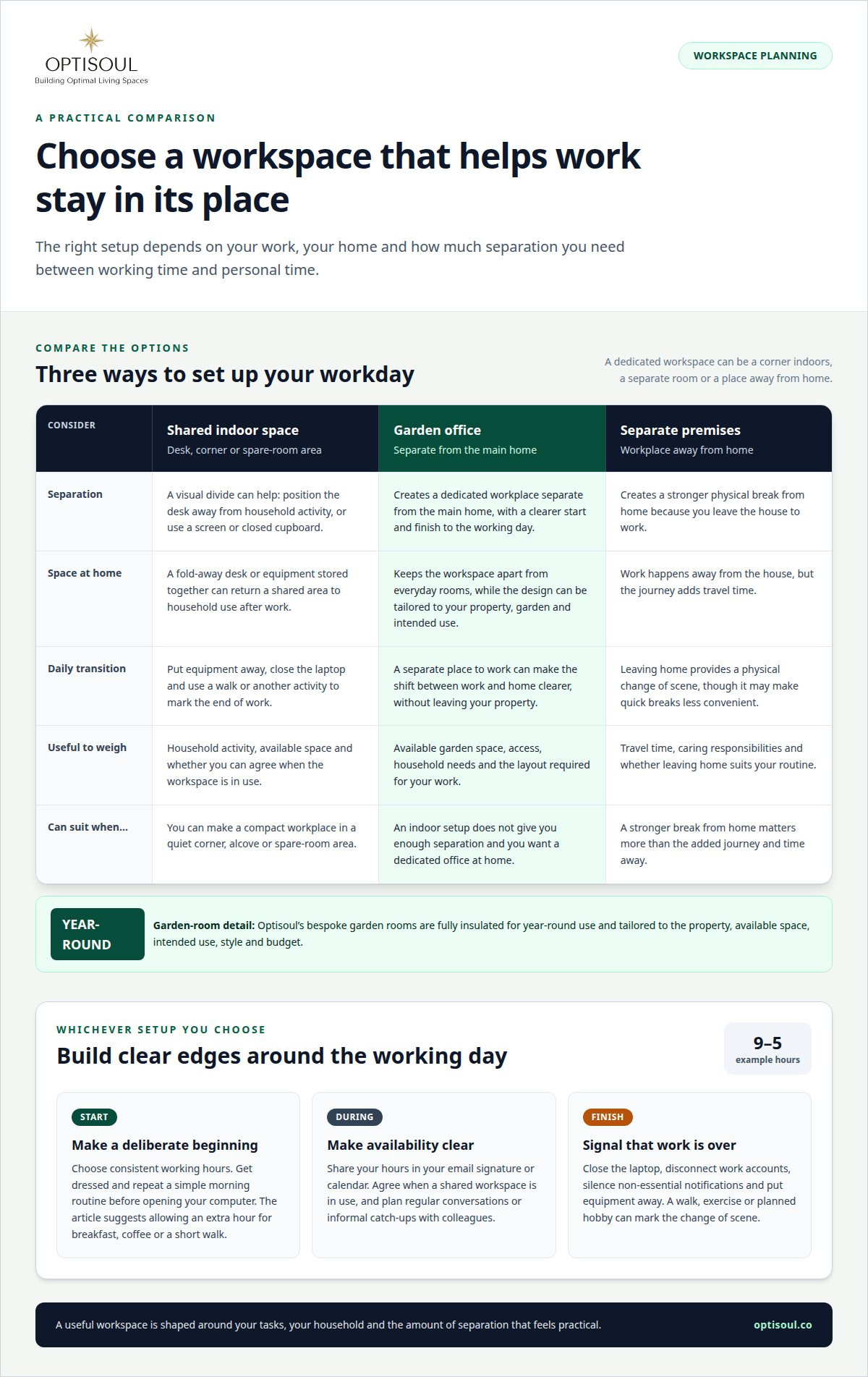
A designated workspace doesn’t have to be a separate room. In a shared space, position your desk away from household activity, and use a screen or closed cupboard to create a visual divide. Keep work equipment together in one place. If you work on a laptop, separate your work and personal logins to reduce the temptation to check messages during leisure time.
Build a morning routine before opening your computer. Allow an extra hour for breakfast, a quiet coffee or a short walk, and get dressed before sitting down to work. Avoid starting as soon as you wake; a deliberate beginning can make the day feel less like one long stretch at a screen. Choose the same simple sequence each morning, even when your schedule changes.
Mark the end of work with an activity that takes you away from your desk, such as a walk, exercise or a planned hobby. For example, close your laptop and leave the house for a short errand to create a clear change of scene. These rituals won’t remove every difficult day, but they can structure your routine and protect time for personal life. If work is hard to switch off from, adjust the cues or workspace that blur the boundary.
3. Using a designated home office or separate premises
A designated office gives work a consistent address, while separate premises create a stronger physical break from home. To find a work life balance with a separate home office, weigh your tasks, household space and preferred level of separation. Calls and paperwork may suit a quiet room; mostly online work could fit a suitable desk in different rooms. A short walk before and after work can mark the transition.
There’s no single cost for setting up a home office. The amount depends on what you already have and what the space needs, such as a desk, chair, lighting, storage or improved internet access. A spare room may need little adjustment; creating a dedicated workspace elsewhere can involve different choices and costs, though residential renovation specialists such as FT2 Interior Design show how tailored cabinetry and thoughtful interior planning can help incorporate functional workspaces into existing floor plans.
A dedicated office can take space away from other household uses, and working alone may reduce everyday contact with colleagues. A separate garden office keeps the workspace at home, while separate premises add travel time and mean leaving the house, which may be inconvenient for caring responsibilities or quick breaks. Regular calls with colleagues, shared workdays and an exercise break can help maintain connection and structure. Keep social media notifications off during work if they interrupt your focus.
In a small UK home, establish a compact workplace in a quiet corner, alcove or spare-room area. A fold-away desk can return that space to household use after work; a dedicated chair or lamp can signal when the area is for work. Keep equipment together in one container, then put it away at the end of the day. If you can’t create enough separation indoors, a garden office or separate premises may better suit your routine.
Optisoul Garden Rooms and Outdoor Living Spaces: Bespoke Garden Offices
Optisoul Garden Rooms and Outdoor Living Spaces designs bespoke garden offices for people who need a dedicated workplace separate from the main home. A garden office can give your working day a clear beginning and end while keeping household space available for everyday use.
Optisoul’s garden rooms are fully insulated for year-round use. Each is tailored to the property, available space, intended use, style and budget. Consider how you work: a quiet setting for calls may need a different layout from a desk, storage and space to move between tasks. The design can also account for access to the office and how it fits into your garden.
If a garden office feels like the right next step, contact Optisoul Garden Rooms and Outdoor Living Spaces to discuss your site, working routine and budget.
Shape a workspace around the life you want to lead
A work life balance with a separate home office begins with a practical question: what would make it easier to leave work behind at the end of the day? Consider how you use your garden, what your household needs and whether a dedicated workspace would give your routine clearer boundaries. A thoughtful design should suit your property and intended use without taking space from activities that matter.
Optisoul creates bespoke garden offices for focused work, alongside bespoke garden rooms and garden gyms for other uses. You can shape the brief around the role you want the room to play in daily life, now and over time.
If you’re ready to explore a garden office or discuss your ideas, contact Optisoul Garden Rooms and Outdoor Living Spaces. A considered plan can help you picture a workspace that feels distinct from home, yet naturally belongs in your garden.
Frequently Asked Questions
What’s the best way to establish clear boundaries between your home life and work life?
Agree on how household members can signal that you’re unavailable, such as knocking before entering during a call. Share your work calendar with family or housemates if it helps them plan around meetings. Decide in advance how to handle genuinely urgent interruptions, so everyday requests don’t automatically become exceptions to your boundaries.
How does a separate home office improve work-life balance?
A dedicated office can make practical parts of working from home easier to manage. You can leave your monitor and equipment set up, keep papers out of shared rooms, and take calls without competing with household noise. Plan the layout around your routine, including storage for documents and space for the equipment your role requires.
How can you set boundaries between work and home when working remotely?
Tell colleagues which channel to use for urgent matters and which messages can wait until your next working period. For example, agree that a direct call is reserved for time-sensitive issues, while routine updates go into a team message. This gives others a clear way to reach you without encouraging constant checks of email and social media.
What is a comfortable home office setup?
Set up your desk so you can see the screen comfortably without repeatedly turning, and choose a chair that supports a comfortable working position. Place frequently used items within easy reach, keep cables tidy and position lighting to limit screen glare. A notebook for quick tasks can also keep your desktop clear during calls.
What daily routines help people switch off after working from a home office?
Before finishing, write down the next task you’ll tackle and any message that needs a reply. This gives unfinished work a place to wait instead of relying on memory during the evening. Close open work documents, leave your work phone in its usual spot, then begin a planned personal activity, such as preparing dinner or meeting someone.

Article by
Creig Franklin Rainbow Anderzon
Creig Franklin Rainbow Anderzon is the founder of Optisoul and a highly experienced builder and qualified carpenter with over 30 years in the construction industry. He specialises in designing and building bespoke garden rooms across Surrey, combining practical building knowledge with a strong eye for detail, quality craftsmanship and long-lasting finishes.
Disclaimer
Please note: This article provides general guidance only. Planning permission, permitted development rights, building regulations, costs and site requirements can vary depending on the property, location and proposed use. Always seek advice specific to your project from your local planning authority or a suitably qualified professional.
For advice about a bespoke garden room in Surrey, contact Optisoul to arrange a site survey.


