

The most inviting corner of your garden can feel like a room of its own. Creating a private garden retreat is about more than screening out the view. It means shaping a calm, welcoming place around how you want to spend time outdoors. Greenery, comfortable seating and a sense of shelter can make even a modest space feel removed from everyday routines.
A garden retreat can be simple or richly layered, with a secluded seat for reading, a sheltered spot for meals or separate areas for different activities. This guide explores what gives a garden its restorative character, how pergolas and other forms of cover can shape comfortable seating, and how to organise zones so the space feels connected rather than crowded. You’ll also find practical design considerations to help turn an appealing idea into a garden retreat that works for your home.
Key Takeaways
- Use layered planting to create a sense of privacy; water can soften the presence of nearby noise but won’t block it completely.
- Consider a pergola or gazebo to give a seating nook shelter and a more intimate feel.
- Plan separate areas for relaxing, dining or growing plants, then connect them with clear pathways.
- For a retreat centred on work, exercise or outdoor entertaining, explore how a bespoke garden room or outdoor living area could fit your space and routines.
1. What is a Tranquil Garden?
A sanctuary garden brings trees, shrubs, plants and seating together to create a tranquil retreat. The NHS describes these elements as part of a garden sanctuary. Creating a private retreat in your garden means shaping an outdoor space around privacy, calm and the activities you enjoy.
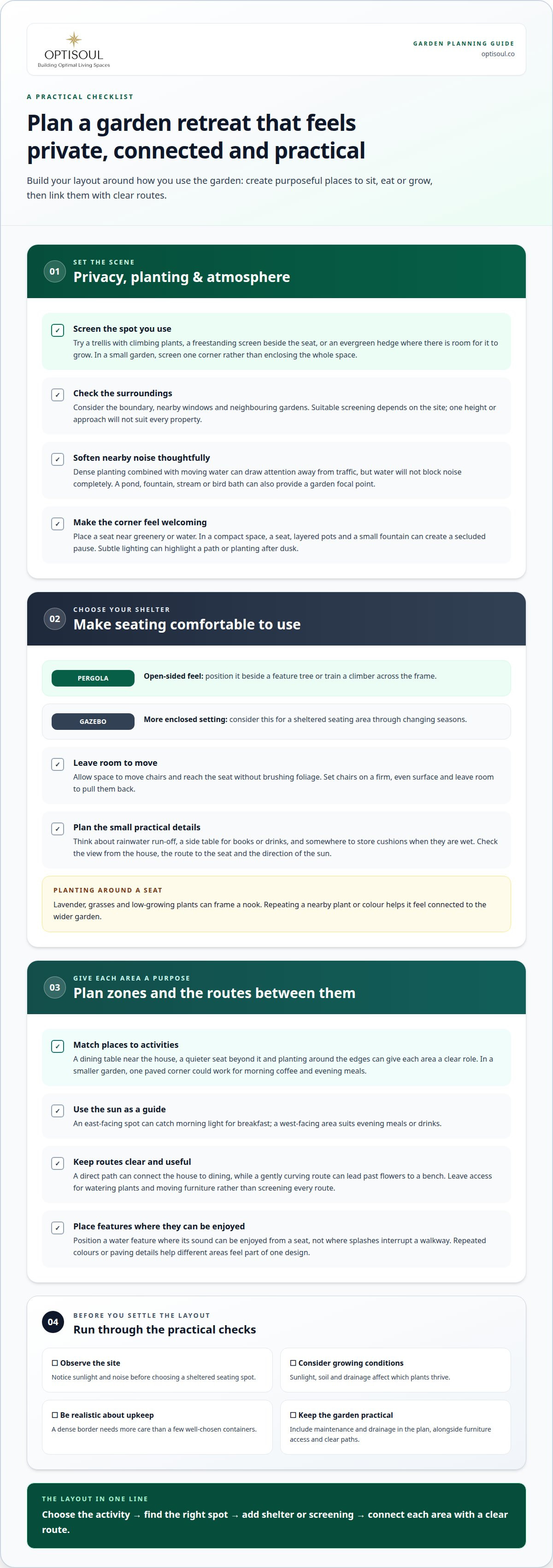
For privacy without a solid fence, use a trellis with climbing plants or place a freestanding screen beside the seating. Evergreen hedges offer a living alternative if there’s room for them to grow. In a small garden, screen one corner rather than enclosing the whole space to preserve openness and daylight.
When choosing a fence or hedge, consider the boundary, nearby windows and the effect on neighbouring gardens. The suitable screening height depends on the site, so avoid assuming one approach will work for every property.
Screening costs depend on the boundary length, material or plant size, site access and installation. Compare these factors when weighing up a trellis, screen or hedge, each of which offers a different balance of immediate cover and future growth.
To soften road noise, combine dense planting with a water feature. Moving water can draw attention away from traffic, but it won’t mask noise completely. A pond, fountain or stream can provide a gentle focal point; a bird bath offers a simpler water feature that can attract visiting birds.
For a calming atmosphere, place seating near greenery and water, then add subtle lighting to highlight a path or planting after dusk. In a compact space, a seat, layered pots and a small fountain can create a secluded pause.
Start by observing sunlight and noise, then choose a sheltered spot for seating. Add screening, suitable plants, a water feature and carefully placed lighting. Plan for maintenance and drainage, too, so the retreat remains practical as well as relaxing. If your project involves extensive groundworks, paving or bespoke structures, regional specialists such as WillsByrne Construction & Landscaping LTD can assist with the building and landscaping stages.
2. Adding pergolas, gazebos and sheltered seating
A pergola or gazebo can shelter a seating area and make it more usable through changing seasons. A pergola with open sides feels airy, while a covered gazebo offers a more enclosed setting. Choose a structure to suit how you’ll use the space, whether for a quiet morning coffee or relaxed outdoor meals.
For an intimate nook, position a pergola beside a feature tree or train a climber across its frame. Lavender and other fragrant plants can soften the edges with colour and scent. Leave enough room to move chairs and reach the seating without brushing against foliage.
Curved flower beds can soften the lines around a bench or dining area. A border of lavender, grasses and low-growing plants can frame the seating without creating a rigid enclosure. Repeating a plant or colour nearby helps the nook feel connected to the wider garden.
Comfort depends on practical details as much as appearance. Place chairs on a firm, even surface, leave space to pull them back and consider where rainwater runs off the shelter. A small side table keeps books or drinks close; cushions add comfort but need to be stored when wet.
Before settling on a position, consider the view from the house, the path to the seating and the direction of the sun. These choices help make the retreat peaceful without making it feel cut off. To explore a garden layout around your needs, discuss your ideas with the team.
3. Planning garden zones for different activities
Match each garden zone to an activity: place a dining table near the house, a quiet seat beyond it and planting around the edges. This gives each area a purpose while keeping routes clear. In a smaller garden, one spot can serve more than one role, such as a paved corner for morning coffee and evening meals.
Follow the sun when choosing positions. An east-facing spot can catch morning light for breakfast, while a west-facing area suits evening meals or drinks. Taller shrubs and trees can separate seating from play or growing areas. Leave practical access for watering plants and moving furniture rather than screening every route.
Paths help the garden unfold naturally. A gently curving route can lead past flowers to a bench, while a direct path connects the house to a dining space. Place water features where their sound can be enjoyed from a seat, rather than where splashes interrupt a walkway. Repeated colours or paving details help different areas feel like part of one design. Those exploring ideas for integrating hard landscaping with natural terrain can look to experienced design portfolios such as azgreenearth.com to see how stonework, pathways and planting schemes unite distinct outdoor zones.
Give planting space according to its growing needs: sunlight, soil and drainage affect which plants thrive. A sunny border might hold flowers, whilst pots near a table can offer herbs to collect for cooking. Keep maintenance in mind; a dense border needs more care than a few well-chosen containers. To shape zones around your garden and routines, discuss your garden layout.
Optisoul Garden Rooms and Outdoor Living Spaces
When planting and seating alone don’t meet your needs, Optisoul Garden Rooms and Outdoor Living Spaces can help create a more complete garden retreat. A bespoke garden room can provide a dedicated place to work, exercise or unwind, while the surrounding garden remains open for dining and relaxing.
Each new room is tailored to the property, available space, intended use, style and budget. That makes it possible to consider how the building will sit alongside garden zones, routes and sheltered seating, rather than treating it as a separate addition. A garden office, gym or hot tub and fire pit area can each support a different routine, with the overall layout planned around how you want to use the garden.
If you’re ready to explore a design that suits your space and everyday plans, contact Optisoul Garden Rooms and Outdoor Living Spaces.
Shape a garden retreat around your everyday life
Give your next design decision a clear starting point: consider what you’d like to make room for in an ordinary week. Perhaps you need somewhere to focus, exercise, create or pause between other commitments. Creating a private garden retreat can begin with that routine, then take shape around the available space and the privacy you want.
Consider how the retreat should connect with the house and the rest of the garden. A useful design brief might note when you’ll use it, what you need close at hand and which existing views or features you want to preserve. These choices help turn an appealing idea into a considered, personal space.
When you’re ready to develop your ideas, contact Optisoul Garden Rooms and Outdoor Living Spaces to discuss your garden and intended use. A thoughtful first conversation can help you find a direction that feels right for your home.
Frequently Asked Questions
What is a Sanctuary Garden?
A sanctuary is a garden shaped around the experience you want, rather than a prescribed style. It might be a quiet place to read, a spot for morning reflection or a small garden devoted to growing. The design can be formal or informal; what matters is that its details support how you want to spend time outdoors.
How can I design a private garden in the UK?
Consider sightlines from upstairs windows as well as ground-floor views, since they affect how exposed a seating area feels. Decide which views you most want to screen, then sketch possible positions from the rooms you use regularly. This helps you plan for privacy inside and out, rather than relying on how the garden looks from a single viewpoint.
What plants are best for creating privacy in a garden in the UK?
Choose plants to suit the screening you need. Evergreen foliage offers a more consistent visual screen, while deciduous plants change with the seasons and let more light through in winter. Before planting, consider how much pruning you can manage and whether the mature height will suit the boundary and nearby windows.
How can I attract wildlife while creating a private garden?
Flowers such as foxgloves and hardy geraniums can attract bees and butterflies. Rather than cutting every stem back as soon as flowering ends, leave some seedheads standing where they suit the design. A varied planting scheme can provide food and cover while keeping the garden’s structure intentional and composed.

Article by
Creig Franklin Rainbow Anderzon
Creig Franklin Rainbow Anderzon is the founder of Optisoul and a highly experienced builder and qualified carpenter with over 30 years in the construction industry. He specialises in designing and building bespoke garden rooms across Surrey, combining practical building knowledge with a strong eye for detail, quality craftsmanship and long-lasting finishes.
Disclaimer
Please note: This article provides general guidance only. Planning permission, permitted development rights, building regulations, costs and site requirements can vary depending on the property, location and proposed use. Always seek advice specific to your project from your local planning authority or a suitably qualified professional.
For advice about a bespoke garden room in Surrey, contact Optisoul to arrange a site survey.


