

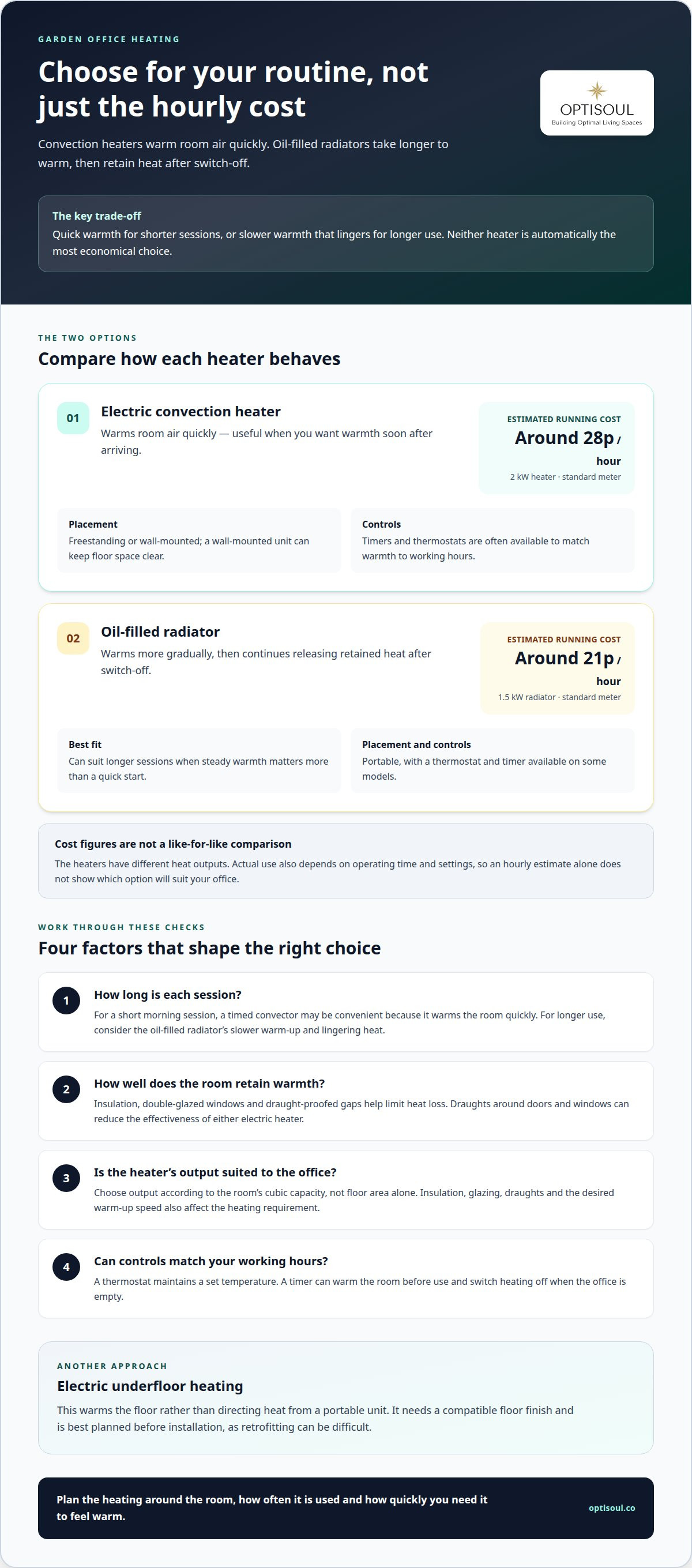
The quickest heater isn’t automatically the most economical choice. The question of how to heat a garden office efficiently comes down to how quickly you need warmth and how long you want it to linger: convection heaters warm the air promptly, while oil-filled radiators heat more gradually and retain warmth after switching off. An estimated 2 kW convection heater costs around 28p per hour to run on a standard meter, compared with around 21p per hour for a 1.5 kW oil-filled radiator. As their heat outputs differ, these figures aren’t a like-for-like cost comparison.
Both options can work in a garden office, but the right choice depends on how often you use the room, how quickly you need it to warm up and how well it retains heat. This comparison covers convection heaters and oil-filled radiators, including controls, warm-up time and running costs, to help you choose for your routine and comfort.
Key Takeaways
- Choose a convection heater when quick warmth matters, and use its thermostat or timer to match heating to your working hours.
- Compare heaters’ heat outputs as well as their running costs; an hourly figure alone doesn’t show which will suit your room.
- Good insulation, glazing and draught control help limit heat loss, so consider the building as well as the heater.
- An oil-filled radiator warms more gradually but retains heat after switch-off, making your usage pattern central to the decision.
Electric convection heaters
For a garden office used on a regular schedule, an electric convector can warm the air quickly. It may be freestanding or wall-mounted, keeping floor space clear when its position is planned into the room. Choose its output according to the office’s cubic capacity, rather than floor area alone. A 2 kW convection heater is estimated to cost around 28p per hour on a standard meter.
Controls help match heating to your routine. Many convection heaters have a 24-hour timer and thermostat, so you can set warming periods and a target temperature. A timer can avoid running the heat source while the office is empty. Portable convection heaters suit occasional use, but frequent use can mean higher running costs. In a well-insulated room, reducing draughts also helps limit heat loss.
Portable oil-filled radiators are another option, but they warm more slowly and retain heat after switch-off. An estimated 1.5 kW oil-filled radiator costs around 21p per hour on a standard meter. These figures aren’t directly comparable: the heaters have different heat outputs, and actual use depends on operating time and settings.
| Option | Warming | Controls and placement | Estimated running cost |
|---|---|---|---|
| Convector | Warms room air quickly | Freestanding or wall-mounted; timer and thermostat often available | 2 kW: around 28p per hour |
| Oil-filled radiator | Warms more slowly; retains heat after switch-off | Portable; can use a thermostat and timer | 1.5 kW: around 21p per hour |
For a short morning session, a timed convector may be convenient because it warms the room quickly. For longer use, compare heat retention and control settings. Both are electric heaters for indoor use, not outdoor heating equipment.
Garden office heating - What’s the best option?
Start with the building itself: insulation and glazing help limit heat loss, while heating controls determine when energy is used.
Insulation and glazing
Insulate the floor and roof, fit double-glazed windows and draught-proof gaps around doors. These measures reduce heat escaping; they don’t generate warmth like a heater. Keep planned ventilation in mind when improving airtightness, as moisture build-up can contribute to condensation. Building Regulations exemptions depend on factors such as an outbuilding’s size and use; the Planning Portal explains outbuilding requirements. Electrical work can have separate requirements, covered by the relevant electrical safety guidance.
Underfloor heating
Electric underfloor heating warms the floor rather than directing heat from a portable unit. It requires a compatible floor finish and is best planned before installation, as retrofitting can be difficult.
Heating capacity
Choose a heater based on the office’s cubic capacity, not floor area alone. The required output also depends on insulation, glazing, draughts and how quickly you want the room to warm up. A well-sealed room has different heating needs from one losing warmth around windows or beneath the floor.
Thermostats, timers and smart controls
A thermostat switches heating on or off to maintain a set temperature. A timer can warm the room before you use it and switch the heating off when it is empty. If your electricity tariff has off-peak periods, scheduling may help you use them. Solar panels’ contribution depends on available sunlight, so you may need a backup heat source.
Oil-filled radiators
For a garden office used throughout a winter working day, an electric oil-filled radiator provides steady warmth rather than an instant burst. Electricity heats the sealed oil, which retains warmth and continues to release it after the radiator switches off. This lingering heat can suit longer sessions, but the radiator will not cool the room in summer.
Warm-up time is an important trade-off. Oil-filled radiators warm more slowly than convection heaters, so turning one on only after you arrive may leave the start of a short session chilly. A thermostat and timer can match heating to a regular routine. How to heat a garden office efficiently depends partly on whether you need rapid warmth or heat that lasts longer.
Portability helps if you change the garden office layout. Unlike fixed underfloor heating, an oil-filled unit needs no permanent fixture, so you can place it near a desk or reading chair. Check doors and windows too: draughts can reduce the effectiveness of any electric heating. If you use the room briefly, another heater may warm it sooner.
Running costs can rise when an electric radiator frequently heats a poorly insulated room. Gaps around doors and windows, for example, let warmth escape during daily use. A timer can prevent heating an empty office, while insulation helps reduce heat loss. To decide how to heat a garden office efficiently, consider session length, room construction and your heating routine together. Oil-filled radiators are a familiar portable option, but they are not automatically the most economical choice for every workspace.
Discuss heating for your garden office as part of its design.
Optisoul Garden Rooms and Outdoor Living Spaces: Bespoke Garden Offices
Optisoul designs bespoke garden offices that are fully insulated and built to UK building regulations for year-round use. If you plan to work in the room regularly, consider heating alongside the layout rather than leaving it as a later decision. Each design is tailored to the property, available space, intended use, style and budget.
A considered office layout can support your working routine, with heating provision considered as part of the design. The right arrangement depends on how you will use the building and the conditions it needs to provide. Optisoul also creates bespoke garden rooms for other everyday activities, from exercise to quiet time outdoors.
If you’re planning a garden office, contact Optisoul to discuss your site, intended use and budget.
Plan a garden room around the way you’ll use it
Look beyond the heater itself. Planning how to heat a garden office efficiently starts with understanding your working routine: when you’ll use the room, where your desk will go and how you want the space to feel in colder weather. Bringing these decisions into the design early helps the layout and heating approach work together.
Optisoul creates bespoke garden offices, garden gyms and garden rooms, each shaped around its intended use. A thoughtful design consultation can explore how the space, layout and heating provision will support your everyday plans while making the most of the garden.
Share your site, intended use and budget with Optisoul Garden Rooms and Outdoor Living Spaces to begin shaping a garden room that feels considered from the outset.
Frequently Asked Questions
So what’s the verdict?
Choose an arrangement that suits how you use the room, rather than selecting a heater by type alone. If you work at a desk throughout the day, consistent comfort across the occupied area may matter most. For a room used for different activities, consider where people sit or move and whether the heating can serve those areas effectively.
What is the most economical way to heat a garden room?
Compare expected electricity use over the same period, taking account of each heater’s power rating, operating hours and your tariff. This is more useful than comparing purchase prices or relying on a single hourly estimate. Your chosen room temperature and time spent there also affect consumption, so base your comparison on a realistic working week.
What is the optimal temperature for a garden office?
A suggested range for most people is 20 to 25°C, with comfort varying between occupants and tasks. If you spend the day seated at a desk, you may prefer a different setting from someone moving around during calls or practical work. Use the thermostat reading as a starting point, then adjust it to suit how the room feels during normal use.
What insulation and draught-proofing does a garden office need to heat efficiently?
A well-planned specification treats the room as one continuous insulated envelope, including the joins between walls, floor and roof. Gaps or poorly fitted insulation at these junctions can undermine otherwise careful construction. Check window and door seals, and plan ventilation alongside airtightness so fresh air can enter without relying on uncontrolled gaps.
What are the most energy-efficient heaters for a garden office: electric panel, infrared, oil-filled or heat pump?
No heater type is automatically the most efficient choice for every garden office. Infrared heaters warm people and objects within their effective range, which may suit a focused workstation. A heat pump transfers warmth from outdoor air into the room, and some systems can also provide cooling. Panel and oil-filled heaters use electricity directly; compare how they operate with your room’s use and comfort needs.

Article by
Creig Franklin Rainbow Anderzon
Creig Franklin Rainbow Anderzon is the founder of Optisoul and a highly experienced builder and qualified carpenter with over 30 years in the construction industry. He specialises in designing and building bespoke garden rooms across Surrey, combining practical building knowledge with a strong eye for detail, quality craftsmanship and long-lasting finishes.
Disclaimer
Please note: This article provides general guidance only. Planning permission, permitted development rights, building regulations, costs and site requirements can vary depending on the property, location and proposed use. Always seek advice specific to your project from your local planning authority or a suitably qualified professional.
For advice about a bespoke garden room in Surrey, contact Optisoul to arrange a site survey.


