

The softest floor isn’t always the right choice for a garden gym. A surface that feels comfortable for stretching may not provide the firm support your equipment needs. Choosing garden gym flooring means looking beyond the material underfoot: your training, equipment, cleaning routine and the floor beneath the covering all matter.
Start by listing the activities you’ll do and the equipment you plan to use. Then compare rubber, vinyl, foam and cork by checking product guidance for intended use, care, seams and equipment compatibility. A sample can help you judge surface feel, but it won’t tell you how the complete floor will perform under a machine or weight. This guide sets out what to consider so you can plan flooring as part of a bespoke garden gym, rather than buying a covering in isolation.
Key Takeaways
- Match garden gym flooring to your training and equipment, rather than choosing by material name alone.
- Compare surface feel, cleaning needs, seams and equipment placement before settling on a floor covering.
- Consider sound absorption and sound isolation separately; a floor covering alone can’t soundproof a room.
- Prepare a useful gym brief by listing your activities, equipment and floor requirements for the room’s design.
Garden gym flooring: what changes between weights, cardio and floor exercises?
The right surface depends on your activities, equipment and the room’s planned construction. Flooring should be considered alongside the structure beneath it, not selected by material name alone. A routine based around lifting places different demands on the floor from one centred on cycling, stretching or bodyweight exercises.
Rubber is one option to assess for equipment-based training, where grip and the effect of impact on the floor are important considerations. Foam may feel more comfortable for floor exercises, but check whether the particular product is suitable beneath your equipment. Vinyl can provide a smooth surface that is straightforward to clean, although grip and comfort vary by product. Cork is another option to compare against your planned activities and the manufacturer’s guidance. No material category guarantees a particular result, so check specifications rather than assuming all products behave alike.
For weights, consider where equipment will be placed and how impact is managed. Cardio equipment needs a stable position, while floor exercises make comfort and grip more noticeable.
Which flooring considerations matter for different workouts?
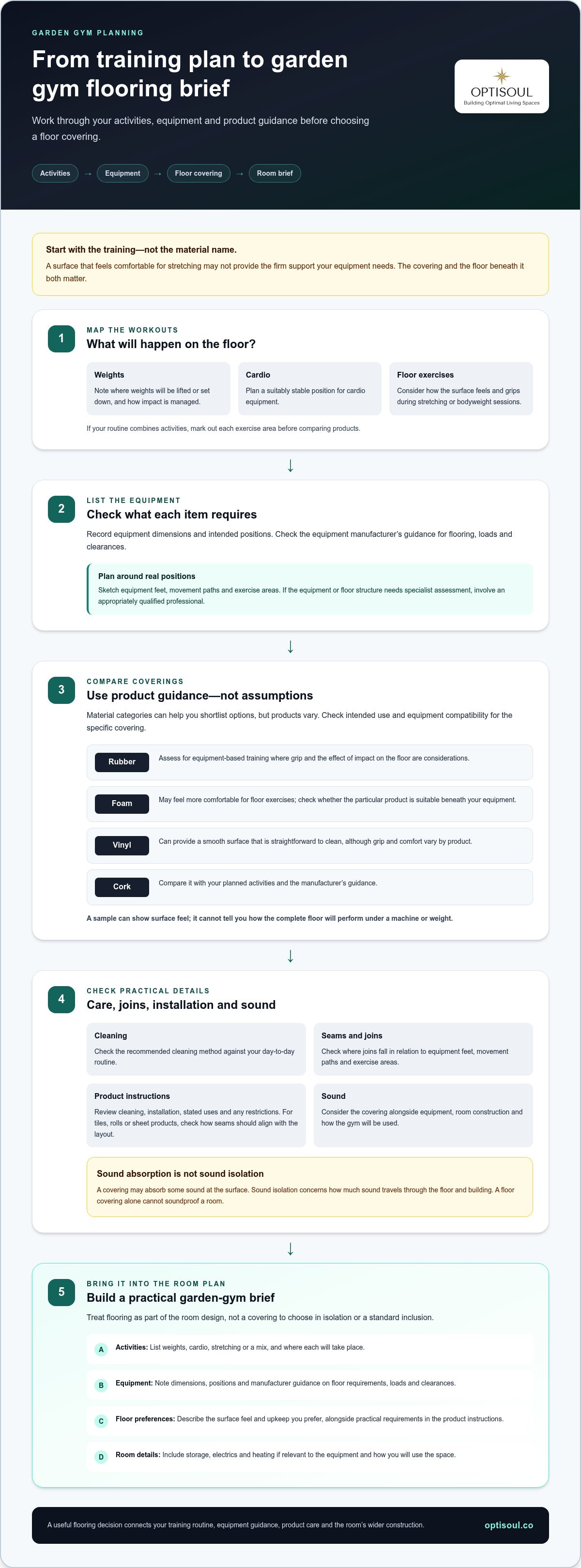
For strength training, note where weights will be lifted or set down, and how the floor covering relates to the underlying floor. Cardio equipment needs a suitably stable position. Bodyweight sessions may put more emphasis on how the surface feels and grips. If your routine combines all three, mark out activity areas and equipment positions before comparing products.
Check the product’s instructions for cleaning, installation and any limitations on use. Note where joins or seams will fall in relation to equipment feet, movement paths and exercise areas. Check each equipment manufacturer’s guidance for floor requirements, loads and clearances. If the planned equipment or floor structure requires specialist assessment, involve an appropriately qualified professional. These details give your flooring brief a practical foundation without assuming one covering suits every activity.
How to compare garden gym flooring for comfort, noise and upkeep
A useful comparison goes beyond how a sample feels underfoot. Consider how the surface will be cleaned, where its joins will sit, and whether your equipment can stand securely on it. If you are comparing tiles with a roll or sheet product, check the installation guidance and plan how seams will align with the room layout. Care instructions, compatibility and performance vary between products, including those made from the same material.
What should you check before choosing a floor covering?
- Surface feel: Consider grip and comfort for your activities, including any time spent stretching or exercising on the floor.
- Cleaning: Check the manufacturer’s recommended cleaning method and whether it fits your day-to-day routine.
- Seams and placement: Sketch the room layout and mark equipment, movement paths and exercise areas. Check where joins will fall in relation to them.
- Equipment guidance: Follow the manufacturer’s instructions for flooring, positioning, loads and clearances.
- Product limitations: Check the stated uses, installation requirements and any restrictions before choosing a covering.
Noise needs a wider view. A covering may absorb some sound at the surface, but sound isolation is about how much sound travels through the floor and building. Equipment, room construction and how the gym is used all influence the result. A floor covering alone can’t soundproof a room.
A softer-feeling floor may change comfort underfoot, but that does not show whether sound is isolated from the rest of the building. Consider the flooring alongside the room’s wider environment, including heating, ventilation and how you’ll use the gym.
If you’re shaping a garden gym around your routine, you can discuss your garden-room requirements with Optisoul.
Planning garden gym flooring into a bespoke Surrey garden room
A useful brief starts with your routine, then works towards a room that supports it. List your activities, identify the equipment and note its requirements before discussing the layout. This makes garden gym flooring part of the room plan, rather than a decision made after the space has been designed.
What belongs in a garden-gym flooring brief?
- Activities: Note whether you’ll focus on weights, cardio, stretching or a mix, and where each activity will take place.
- Equipment: Record dimensions, intended positions and the manufacturer’s guidance on floor requirements, loads and clearances.
- Floor preferences: Describe your preferred surface feel and upkeep, along with any practical requirements in the product instructions.
- Room details: Include storage, electrics and heating if they are relevant to your equipment and how you’ll use the space.
Optisoul designs bespoke garden gyms around intended use, available space, style and budget. Based in Weybridge, Optisoul serves homeowners in Cobham, Esher, Teddington, Twickenham, Thames Ditton, Claygate, Kingston-upon-Thames, East Molesey, West Molesey, Richmond, Wimbledon, Sunbury-on-Thames, Walton-on-Thames and Chertsey, as well as across Surrey. The flooring choice can be considered as part of the wider room design, rather than treated as a standard inclusion.
See how Optisoul’s design process works to understand how a project takes shape. Bring your activity list, equipment dimensions and product guidance to the design conversation, then talk with Optisoul about your garden-gym plans and the space you have in mind.
Plan a garden gym around the way you train
The right garden gym flooring starts with your routine. Weights, cardio and floor exercises each bring different priorities for comfort, grip and impact. Compare product care guidance and equipment requirements, and consider how the floor covering relates to the room’s construction. Surface sound absorption is not the same as sound isolation through the building.
Bring your activities, equipment dimensions and manufacturer guidance into the room brief, alongside any relevant storage, heating or electrical needs. Optisoul is a family-run, Weybridge-based bespoke garden-room company. Creig Rainbow Anderzon is a City & Guilds-qualified carpenter with over 30 years of building and carpentry experience.
With a clear brief, you can plan a gym around your space and intended use. Discuss your bespoke garden gym and flooring requirements with Optisoul, including your site, routine and budget.
Frequently Asked Questions
Is rubber flooring suitable for a garden gym?
Rubber is one category to compare, not a universal recommendation. Suitability depends on the specific product, your planned exercise, equipment and the room’s construction. Check the manufacturer’s stated uses, limitations and installation guidance before deciding. Don’t assume a rubber covering will protect the building or reduce noise; those outcomes depend on the complete floor and room design.
Can I use foam mats under weights in a garden gym?
Some foam products are intended for particular activities or equipment, so suitability depends on the product rather than the material name alone. Compare its stated use and limits with your planned training and the equipment you’ll place on it. Follow the manufacturer’s guidance, especially where weights are involved, instead of assuming all foam mats perform alike.
What flooring is best for a garden gym with both weights and cardio?
There’s no universally best flooring for a mixed-use gym. Balance surface feel, equipment requirements, cleaning and each product’s specifications. Map where you’ll lift, use cardio equipment and move around, then compare options against those needs. A bespoke garden-room brief can account for your intended use, equipment and available space.
Does garden gym flooring soundproof a garden room?
No floor covering should be described as soundproof without evidence. A surface may affect sound differently from sound isolation, which concerns how sound travels through the floor and building. Noise outcomes also depend on equipment, construction and how you use the room. Check product information and consider the complete room design rather than relying on flooring alone.

Article by
Creig Franklin Rainbow Anderzon
Creig Franklin Rainbow Anderzon is the founder of Optisoul and a highly experienced builder and qualified carpenter with over 30 years in the construction industry. He specialises in designing and building bespoke garden rooms across Surrey, combining practical building knowledge with a strong eye for detail, quality craftsmanship and long-lasting finishes.
Disclaimer
Please note: This article provides general guidance only. Planning permission, permitted development rights, building regulations, costs and site requirements can vary depending on the property, location and proposed use. Always seek advice specific to your project from your local planning authority or a suitably qualified professional.
For advice about a bespoke garden room in Surrey, contact Optisoul to arrange a site survey.


