

A silver-grey finish can be part of the plan, not a sign the timber has failed. Western Red Cedar cladding on a garden room doesn’t need preservative treatment to last; left untreated, it usually weathers to silver-grey within a year or two.
If you’re considering cedar cladding for a garden room in Surrey, the choice is less about preventing that natural change and more about deciding which finish you want to live with. This guide explains how untreated cedar weathers, what a finish can do to preserve its original colour, and why cedar’s light weight and natural durability make it a considered option for a garden-room exterior. You’ll also find practical details to help you weigh up cladding for a space designed around work, exercise or quiet time outdoors.
Key Takeaways
- Choose whether you prefer cedar’s natural silver-grey weathering or want to retain more of its original colour with a UV-protection oil finish.
- Allow for cedar’s varied tones, from cream and pink to deep brown, when deciding how the exterior will sit alongside your garden and home.
- For a cedar-clad garden room, consider the fixing details as well as the timber: cedar tannins can corrode ordinary or galvanised steel and leave dark streaks.
- Optisoul’s bespoke garden rooms are tailored to their intended use, giving you a chance to consider the exterior finish alongside the room’s layout and purpose.
Does Western Red Cedar cladding need treating?
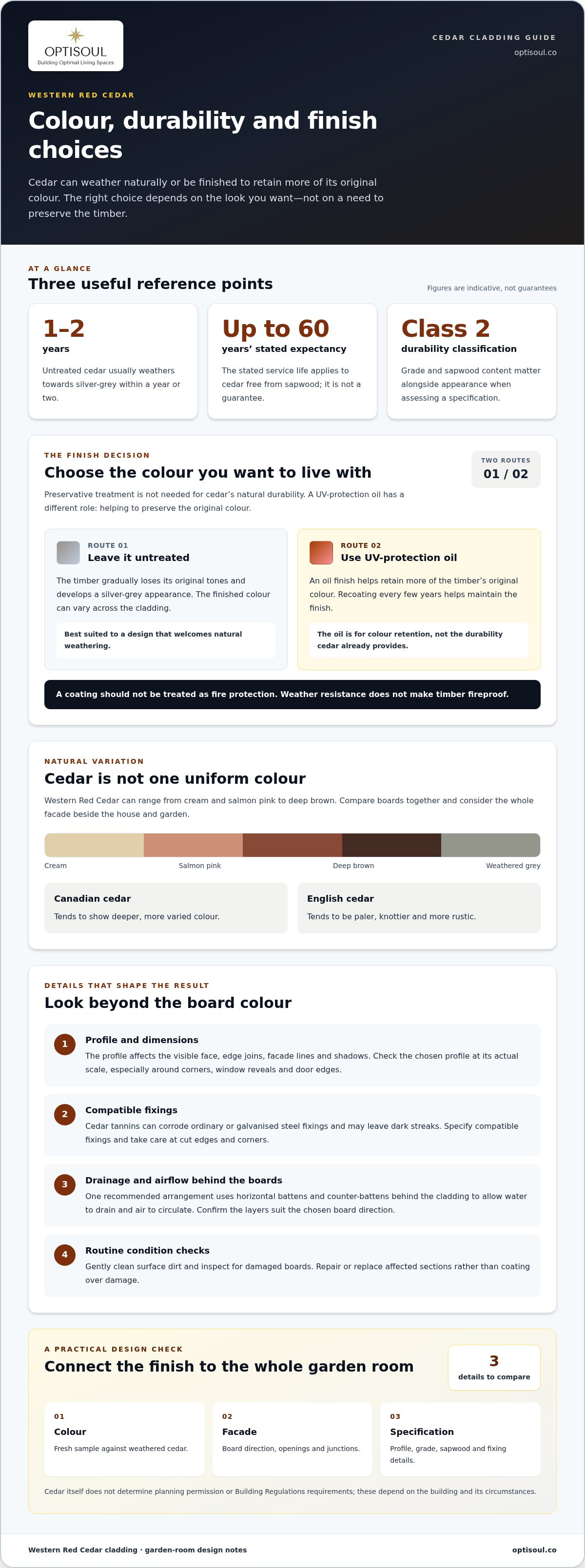
No. Western Red Cedar will last for decades without artificial treatment. UV light will bleach the colour to a silver-grey tone over time.
Natural weathering and colour changes
Uncoated Western Red Cedar changes colour as it weathers outdoors, gradually losing its original tones and taking on a silver-grey appearance. The shift usually happens within a year or two, though the finished colour can vary across the cladding. Look at the whole exterior when deciding whether this natural patina suits your garden room. Comparing a fresh cedar sample with weathered timber can help you picture the contrast.
Weather resistance and UV protection
Cedar is naturally resistant to moisture, insect damage and decay, so preservative treatment isn’t necessary for durability. Western Red Cedar cladding has been known to last up to 60 years without treatment. UV-protection oil serves a different purpose: it helps preserve the timber’s original colour rather than providing the treatment needed for it to last. If you want to retain that colour, recoating every few years helps maintain the finish.
Fire, moisture and durability risks
Weather resistance doesn’t make timber fireproof, and a coating shouldn’t be mistaken for fire protection. Consider fire performance separately from cedar’s natural resistance to moisture. For durability, remember that the stated 60-year service life applies to cedar free from sapwood. For routine care, gently clean surface dirt, then inspect for damaged boards; repair or replace affected sections rather than coating over damage. Keep the finish decision separate from the condition of the timber.
Western Red Cedar’s natural appearance and durability
Colour, board thickness and profile all shape how cedar cladding looks across a garden-room facade.
Cedar cladding appearance
Western Red Cedar ranges from cream through salmon pink to dark brown, so boards can create a varied natural palette. Canadian cedar tends to show deeper, more varied colour, while English cedar is paler, knottier and more rustic. Look at samples together rather than judging one board alone, and consider how the tones will sit beside your home and garden.
Cedar cladding profiles
A cladding profile determines the board’s visible face and how its edges meet, shaping the facade’s lines and shadow. Available thicknesses vary, so check the dimensions of the profile you intend to use. Ask to see the intended profile at its actual scale. Check corners, window reveals and door edges, where cuts make alignment especially noticeable.
Natural durability
Western Red Cedar is naturally durable and can last for decades without preservative treatment. Its service-life classification is Class 2, with a stated expectancy of 60 years when the timber is free from sapwood. Grade and sapwood content therefore matter alongside appearance when assessing a specification. If you’re planning a cedar-clad room, discussing the design and finish can help connect these choices with the intended facade.
Cedar cladding suitability for garden rooms
Western Red Cedar is one timber option for garden-room cladding in the UK. It may be described as Canadian or English: Canadian cedar tends to have deeper, varied colour, while English cedar is paler and knottier. Either can create a striking exterior, depending on the character you want.
Cedar’s lightweight quality suits timber-frame garden rooms, as its cladding adds less weight than heavier materials. Consider the whole facade: board direction, openings and junctions all affect the finished appearance. Cedar tannins can corrode ordinary or galvanised steel fixings and may leave black streaks. Choose compatible fixings and take particular care around cut edges and corners.
Installation details matter, especially with vertical boards. One recommended arrangement uses horizontal battens and counter-battens behind them, allowing water to drain and air to circulate. This helps manage moisture behind the exterior timber. Confirm the layout can accommodate these layers before settling on the board direction.
In England, planning permission and Building Regulations are separate considerations. Permitted-development conditions vary; within 2m of a boundary, the maximum permitted-development height is 2.5m overall, subject to other conditions. According to GOV.UK guidance, detached buildings under 15m² without sleeping accommodation are normally exempt from Building Regulations. For buildings between 15m² and 30m², exemption may apply without sleeping accommodation if they are at least 1m from a boundary or substantially non-combustible. Buildings above 30m² normally require approval, and sleeping accommodation changes the exemption position. Cedar itself does not determine either planning or Building Regulations requirements. Discuss a cedar-clad garden-room design around your intended use and site.
Optisoul Garden Rooms and Outdoor Living Spaces: Bespoke Garden Offices
Optisoul designs and builds bespoke garden offices, gyms and rooms around your property and intended use. Every garden room is fully insulated and built to UK building regulations for year-round comfort. Most garden rooms do not require planning permission, though some circumstances may require an application. Optisoul can assist.
The collaborative process begins with a free site survey and design consultation, followed by a detailed quotation with no hidden costs. Quotations are valid for 30 days, and a staged payment plan sets out each stage clearly within your quotation. Garden rooms typically take 6-8 weeks to build, with exact timing confirmed for each project. This gives you a considered route from early ideas to a space designed for work, exercise or time together.
Discuss your garden-room plans with Optisoul Garden Rooms and Outdoor Living Spaces.
Shape the next stage of your garden-room design
Treat cedar cladding as part of the wider garden-room design, not an isolated finish decision. Consider the character you want the building to bring to its setting, how you’ll use the space, and which details should connect across its exterior and interior. These priorities give the design consultation a clear starting point.
Whether you’re planning a place to work, exercise or spend time with family, Optisoul can help shape a bespoke design around your intended use and property. Bring your ideas, practical requirements and preferred look together in a first conversation. Share your garden-room plans with Optisoul and take the next step towards a space that feels considered from the outset.
Frequently Asked Questions
What colour does cedar cladding turn over time?
Western Red Cedar develops a silver-grey appearance as it ages outdoors because UV light bleaches the colour over time. The result can vary across a wall, so assess the whole elevation rather than judging from a small sample. If you’re comparing finishes, view samples beside the garden room’s windows and doors in daylight. UV filter treatments are available to stop or slow the colour change.
Why Should You Choose Real Timber Garden Room Cladding?
Real timber brings natural grain and board-to-board variation that manufactured surfaces cannot replicate exactly. Those differences can add visual depth to a simple garden-room shape. Before choosing, consider how the timber will sit beside existing materials such as brick, painted render or dark window frames. Viewing a sample against those surfaces can make the decision clearer.
How much does cedar cladding for a garden room cost in the UK?
The price depends on the project and is provided after a quote request. Factors include the area to be clad, timber grade, chosen profile, finish and detailing around doors, windows and corners. These affect both material quantities and the work involved. For a garden-room quotation, consider the cladding as part of the full design rather than as an isolated material allowance.
What are the pros and cons of cedar cladding for a garden room?
Cedar has a distinctive natural finish, but its colour and grain vary between boards. This variation can give a facade depth, though it may not suit someone seeking a highly uniform appearance. Decide how much natural variation you’re comfortable with and whether you want to slow the colour change with a UV filter treatment. Keep a record of the timber specification for future repairs.
How does cedar cladding compare with larch, thermowood and composite cladding?
Larch can weather naturally to grey or be stained to add colour. Thermally modified timber offers durability comparable to Western Red Cedar, while composite cladding has a manufactured appearance and requires no treatment or staining. Compare samples in the intended setting and consider whether you prefer visible timber grain, a selected stain or a more consistent composite finish.

Article by
Creig Franklin Rainbow Anderzon
Creig Franklin Rainbow Anderzon is the founder of Optisoul and a highly experienced builder and qualified carpenter with over 30 years in the construction industry. He specialises in designing and building bespoke garden rooms across Surrey, combining practical building knowledge with a strong eye for detail, quality craftsmanship and long-lasting finishes.
Disclaimer
Please note: This article provides general guidance only. Planning permission, permitted development rights, building regulations, costs and site requirements can vary depending on the property, location and proposed use. Always seek advice specific to your project from your local planning authority or a suitably qualified professional.
For advice about a bespoke garden room in Surrey, contact Optisoul to arrange a site survey.


